
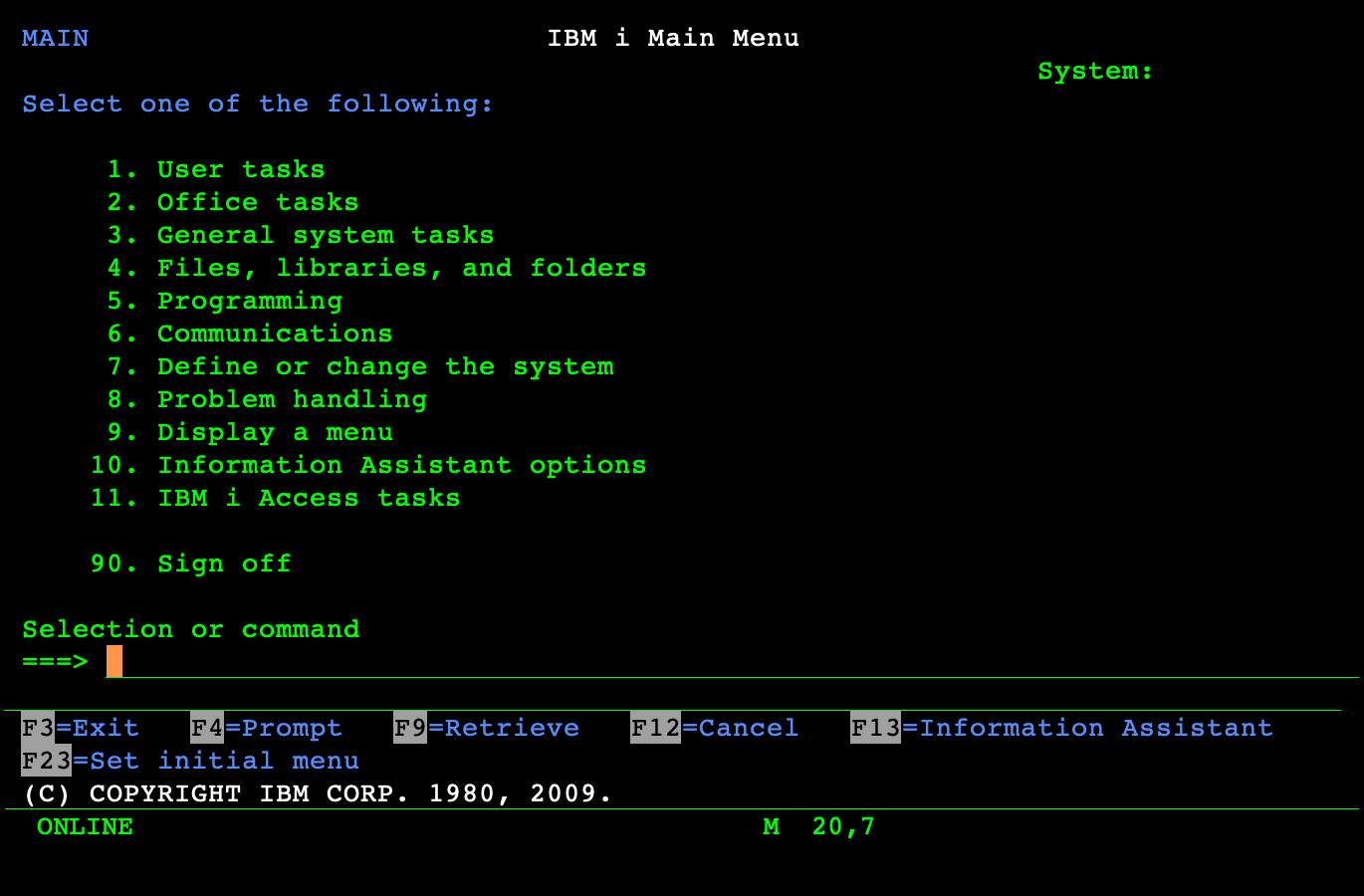

Some technologies do not disappear because they are obsolete. They remain because they are useful, embedded, reliable enough, and too dangerous to remove quickly.
This is the paradox of COBOL.
COBOL is a programming language that was designed in 1959 to solve a very real business problem: how to create a common language for administrative, financial, and government computing. It succeeded almost too well.
More than sixty years later, COBOL is still present in banks, insurers, payment systems, public administrations, unemployment systems, tax systems, pension systems, and other critical infrastructures, such as airlines. COBOL still supports large parts of government administration and financial processing, including systems that handle vast volumes of daily transactions. During the Covid-19 pandemic, New Jersey’s unemployment system became a visible example of the problem: the state needed to process a surge of claims, but it also needed people who still understood the legacy COBOL systems behind the service. And that is a worldwide issue.
COBOL is not bad. COBOL was successful precisely because it was good at what it was designed to do. It was business-oriented, relatively readable, machine-independent, and especially well-suited to financial calculations. That is why it became so deeply rooted in the systems of banks and governments. The problem is different: a technology can be robust, useful, and dangerous at the same time.
This is where the cybersecurity and governance implications begin.
Many organizations still treat legacy technology as an IT problem. It is far from that. Legacy technology is an operational resilience issue, a cybersecurity issue, a talent issue, a budget issue, and ultimately a board issue. A system that “still works” may also be a system that few people understand, that is difficult to change, that cannot easily be monitored with modern tools, and that creates unacceptable concentration risk around a small number of ageing experts or external suppliers.
In cybersecurity, we often focus on what is new: artificial intelligence, cloud exposure, ransomware, deepfakes, software supply chain attacks, zero-day vulnerabilities. These topics matter, of course. But some of the most serious risks are not new at all. They are old, stable, silent, and business-critical. They sit under the surface of modern digital services, connected through layers of interfaces, middleware, APIs, batch jobs, and undocumented dependencies.
This creates a dangerous illusion. From the user’s perspective, the system may look modern. There may be a new mobile application, a clean web portal, a cloud-based front end, and an attractive customer experience. But behind the digital façade, a core business process may still depend on decades-old code, old data models, manual operational knowledge, and fragile integration logic. The front end has changed. The foundations have not.
For security professionals, this matters because legacy environments are often difficult to secure by modern standards. They may not support contemporary identity and access management practices. Logging may be incomplete. Vulnerability management may be limited. Segmentation may be imperfect. Documentation may be obsolete. Testing may be risky because nobody is entirely sure what will break. In some cases, the most important control is not technical at all: it is the presence of one or two people only who still know how the system behaves. When they leave for retirement, the organization faces a problem.
That is not resilience. That is institutional memory acting as a compensating control.
The rise of artificial intelligence adds another dimension. Some vendors now propose AI-assisted modernization: tools that can convert old COBOL code into modern languages such as Java. This is attractive, especially for executives who would like a fast, clean solution to a long-standing problem. But automatic conversion is not the same as true modernization. Translating old code into a new language can reproduce the same old structure, the same old complexity, and the same old business logic in a new technical wrapper. The result may look modern but still behave like the legacy system it replaced.
The real challenge is not merely to translate code. It is to understand business processes, data flows, dependencies, controls, exceptions, regulatory requirements, and operational consequences. In critical systems, modernization without understanding can be more dangerous than no modernization at all.
For boards and executives, the key question should therefore not be: “Do we still use COBOL?” The better questions are: “Which critical business services depend on technologies, skills, or suppliers that we no longer fully control? How do we foresee the future?”
These questions apply far beyond COBOL. They apply to old ERP systems, unsupported databases, custom scripts, obsolete network equipment, undocumented interfaces, end-of-life operating systems, shadow IT tools, and business-critical spreadsheets. COBOL is simply a useful symbol of a broader problem: technical debt that has become strategic risk.
The positive news is that legacy risk can be managed. But it must first be made visible. Organizations need a clear inventory of critical systems, their dependencies, their owners, their suppliers, their data flows, and their operational tolerances. They need to know which systems support essential services, which ones are hard to restore, which ones are hard to change, and which ones depend on scarce skills. They also need to distinguish between systems that are merely old and systems that are genuinely risky. Age alone is not the problem. Unmanaged dependency is the problem.
Modernization should then be treated as a risk-based program, not as a heroic technology replacement project. Some systems may need to be replaced. Others may need to be isolated, documented, monitored, wrapped with secure interfaces, or progressively decomposed. In some cases, the right short-term answer is not replacement, but better governance: stronger access control, improved backup and recovery, better logging, knowledge transfer, supplier diversification, and realistic incident response testing.
Boards should also be careful with the word “transformation.” Digital transformation often focuses on new capabilities, new channels, and new customer experiences. But a serious transformation program must also ask what is underneath. A digital service is only as resilient as the systems that support it. A beautiful interface built on a fragile core is not transformation: it is mere cosmetic modernization.
There is also a cultural lesson here. Organizations often reward visible innovation more than invisible maintenance. They celebrate the launch of new platforms but rarely celebrate the removal of obsolete dependencies. They fund new projects but postpone legacy remediation. They ask for speed but underinvest in architectural hygiene. Over time, this creates systems that are impressive from the outside and fragile from the inside.
COBOL reminds us that the future is often built on the past, including the internal culture. The past does not disappear simply because a new layer has been added above it. It continues to process transactions, calculate benefits, move money, store records, and support essential services. And when it fails, the consequences are not historical. They are immediate.
The lesson security professionals should learn is that legacy technology must be part of the risk conversation. Not as a nostalgic technical curiosity, but as a current exposure affecting resilience, security, compliance, and business continuity.
The lesson for executives is equally clear: if a system is critical to the business, then understanding it is not optional. If only a handful of people can maintain it, that is a strategic dependency. If it cannot be tested, restored, monitored, or changed safely, that is a governance problem. If modernization is being promised as a quick automated conversion, that promise deserves scrutiny.
And the lesson for boards is perhaps the most important: old technology is not automatically bad, and new technology is not automatically safe. The real issue is control. Do we understand our critical systems? Do we know where our hidden dependencies are? Do we have the skills to operate them? Can we recover them? Can we secure them? Can we change them without causing harm?
COBOL may be old, but the risk it represents is very modern. It is the risk of digital dependence without sufficient visibility. It is the risk of systems that continue to work until the day they suddenly cannot. And it is a reminder that resilience is not only about preparing for the next cyberattack. It is also about understanding the old code, old assumptions, and old decisions on which today’s digital economy still depends.