
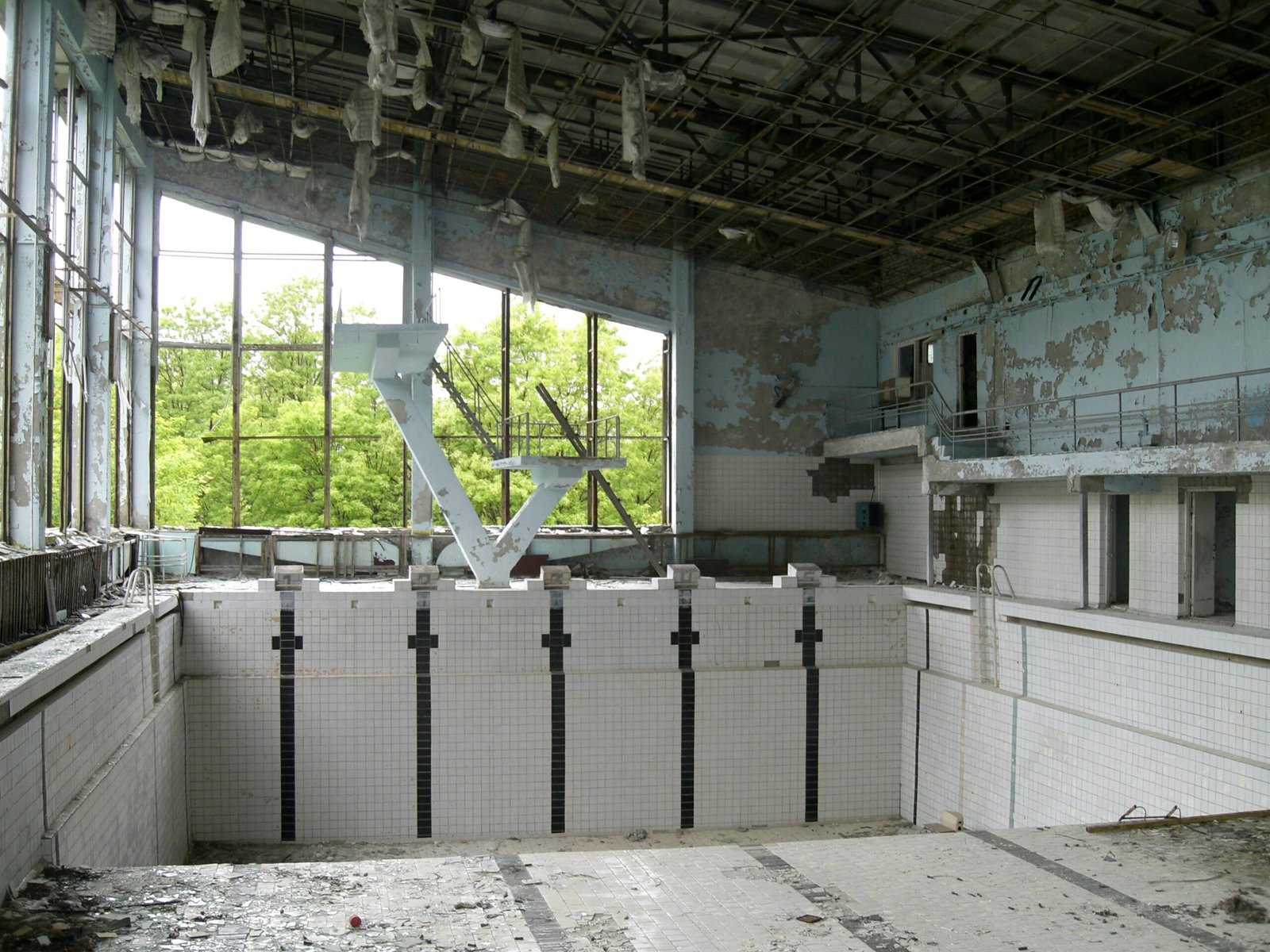

Forty years after the night of April 26, 1986, a new book presents the catastrophe from a different angle, not about nuclear physics, but about decision-making. In Le KGB à Tchernobyl (2026, not translated), historian Galia Ackerman grants us access to the declassified internal archives of the Ukrainian KGB, and what they reveal is more damning than any technical report on the reactor itself.
The KGB knew. It had always known. It knew absolutely everything. In his book Spymaster (1995), Oleg Kalugin, former KGB General, asserted that the KGB employed more agents in Moscow only than the CIA in the entire world.
As early as 1976, i.e., ten years before the explosion, a regional KGB officer filed an urgent report warning that launching the first reactor was “impossible and unacceptable,” that doing so risked “a critical situation associated with radioactive contamination of the environment.” A 1979 note documented a breakdown caused by a design flaw. By 1981, the KGB had recorded 29 emergency shutdowns in four years. A 1984 internal synthesis methodically catalogued structural defects in reactors 1 and 2, concluding drily that “necessary measures have not yet been implemented.” Before the fourth reactor exploded, the archives had logged 9 major accidents and 68 significant failures. The KGB, which was the ears and the eyes of the soviet regime, had all necessary information transmitted to the circles of power.
Chernobyl was not an intelligence failure. It was a decision-making failure.
Intelligence without decision is just filing
The KGB had built, over 15 years, one of the most comprehensive risk assessments ever assembled on a single industrial site. 9,294 individuals under permanent surveillance — phone calls monitored, mail opened and read (hence requires a lot of people). 27 agents and 58 proximity informants on site, each with their codenames (Magistr, Petrovich, Tina, etc.) The reports went up the chain, were recorded, classified, and, in the archives’ own words, left “without appropriate response from the Party and government organs.”
This is the central lesson of Chernobyl, and it has nothing to do with nuclear power. Intelligence exists for one purpose: to inform decisions. When it is collected, processed, stored, and never acted upon, it is not intelligence at all. It is an expensive illusion of control. The Soviet apparatus had mistaken the collection of information for the exercise of power.
In many organizations today, the same trap operates in subtler forms, especially in risk management. We commission studies, run analyses, build dashboards with indicators, hold briefings, and then wait (for more data) before acting. The archive grows. The decision recedes.
It takes courage to decide
Why didn’t the Party act on what the KGB reported? Part of the answer is structural: the system was designed to inform the Party, not to compel it. But the deeper answer is political. In May 1976, during a ministerial visit, the ministry “demanded that the Chernobyl plant be launched in 1976, at any cost.” Dissenting voices are silenced. The plant opened in 1977. Under the conditions we know. I am sure you have already heard that in your organization.
Deciding means accepting responsibility for the outcome. In a system where failure was punishable and success was claimed collectively, raising your hand to say “we must stop, even at cost” was an act of personal exposure that few were willing to make — and still are. The problem was not a lack of information. It was a deficit of courage.
This dynamic is not uniquely Soviet. In any organization, be it corporate, governmental, or military, the person who acts and turns out to be wrong is exposed. Hence, people who are paid to take decisions postpone them as much as possible to avoid accountability and possible punishment — then, concentration camps, now, ruined career. Person who asks for one more report, one more meeting, one more validation round is, in the short term, safe. The culture that rewards analysis over action systematically selects against the decision-makers it most needs. It is comfortable to cross your fingers (in French, we say “squeeze your buttocks”) and hope that nothing happens.
Too much intelligence creates fog
There is a further paradox buried in these archives. After the explosion, the KGB continued doing exactly what it had always done: observe, note, report. A 1987 operational report, drafted a full year after the catastrophe, noted that a “significant number” of workers were not employed according to their functions due to disorganization; that contamination levels regularly exceeded exit thresholds; that workers had received doses above the regulatory limit without any investigation being opened. The surveillance apparatus was still running, still producing reports, in an environment where nothing was under control. Business as usual. Did this change a thing? Nope.
At some point, more information stops reducing uncertainty and starts compounding it. When every actor is generating reports, when the chain of command is flooded with signals, when no one can distinguish the decisive fact from the administrative noise, intelligence becomes fog. The KGB’s problem at Chernobyl in 1987 was not that it lacked data. It was that the volume and the organizational confusion had made decision-making structurally impossible.
The lesson here is one of ruthless prioritization. Intelligence serves decision-making only when it is distilled, when someone has the discipline to say: of everything we know, this is what matters, this is the decision it requires, and this is the moment to make it. Let’s do it. Now. I take the risk.
The eye that saw everything — and served nothing
Galia Ackerman’s book arrives at a verdict that should resonate far beyond the history of the Soviet Union: the KGB documented every information to prevent the catastrophe, but no mandate to act on what it knew, and every institutional reflex to manage the aftermath in the interest of the regime rather than the victims. The regime had every information to prevent the catastrophe, but pushed back, preferring immobility and comfort over action and courage. This was the culture of the Soviet regime, and we know that “culture eats strategy for lunch.”
KGB was an omniscient apparatus in service of a power that wanted knowledge only on its own terms. And in doing so, it transformed an avoidable accident into a durable disaster: documented, archived, classified.
The question for any leader reading this is not whether their organization collects good intelligence. The question is whether they have the structures, the culture, and above all the courage to act on it. Knowing, without deciding, is not a strength. It is, as Chernobyl proves, one of the most dangerous positions an institution can occupy.